

There are still people in Armenia who preserve an entire musical tradition: Artak Aleksanyan’s reflection on Gary Kiosayan’s anniversary concert.
News |
Recently, Eduard Topchyan stated that in order to understand and appreciate classical and jazz music, one must be educated, literate, and possess a certain civilizational backbone.
This was written on social media by Artak Aleksanyan, the executive director of Newmag.
“At first glance, this may sound like an ‘elitist’ statement, but in reality it is a very simple and honest formula. Because art is not only something to listen to or watch — it is also the ability to perceive.
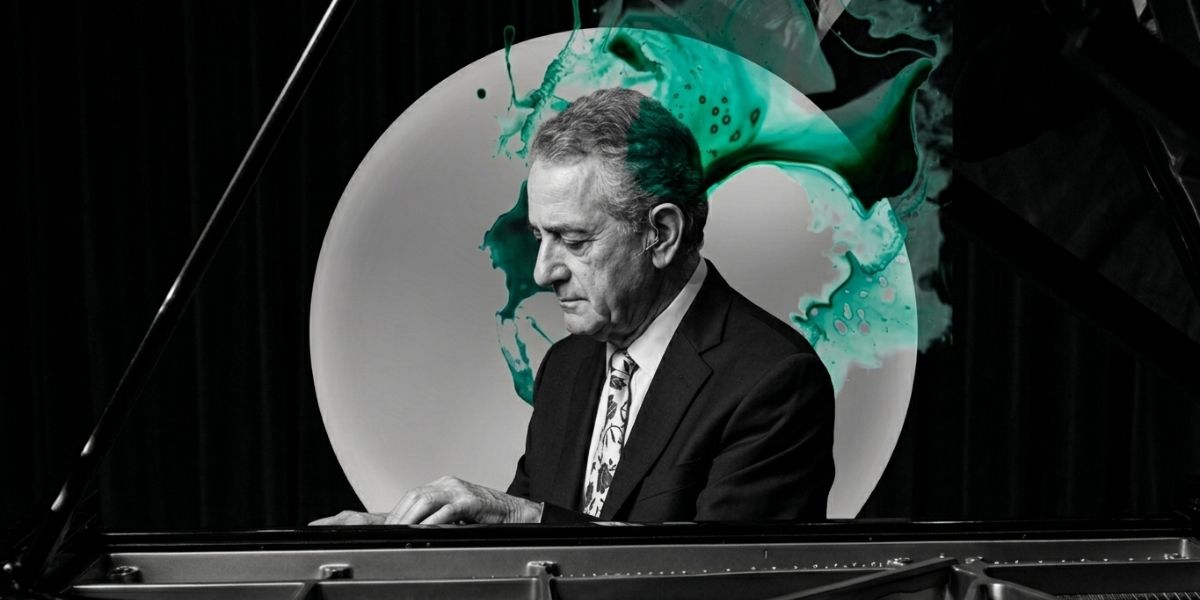
On Saturday, at the Aram Khachaturian Concert Hall, jazz musician Gary Kiosayan celebrated 60 years of his stage career. He celebrated together with his friends — saxophonist Luis Van Taylor, trumpeter Johnny Britt, double bassist Carl Vincent, and drummer Don Littleton. Elaine Stepter and Alla Sahakyan performed vocals.
That evening, alongside classical pieces, the program mainly featured Gary’s own music — soft, rhythmic jazz with Babajanyan-like melodicism, but with a Western mindset. Music that was at once familiar and international, delicate and free.
On stage was a 79-year-old musician — active, composed, cheerful, and full of energy. A true legend.
But the most important feeling of the evening was not merely the anniversary, but the presence of culture on stage — in its most mature, restrained, and confident form. Jazz here was not background music, nor just pleasant entertainment. It was a language that demanded attention, memory, taste, and inner discipline.
And this is where Topchyan’s idea of a “civilizational backbone” becomes clear. Being educated is not just about reading books or knowing names. It is the ability to distinguish true mastery from noise, depth from effect, and years of accumulated experience from momentary brilliance.
In this sense, Gary Kiosayan’s evening was not just a concert, but a cultural reminder. A reminder that in Armenia there are still people who do not simply perform music, but preserve an entire musical tradition. People one cannot pass by indifferently, because their presence is a living part of our cultural memory,” he noted.
Share article





Follow us in social networks
Related posts




-

5 Questions Leaders Should Ask Before Hiring a Fractional Employee
2026/04/28/ 18:41 -
“Your Relative is in Danger”: IDBank Warns About an Aggressive Wave of Phone Scams
2026/04/28/ 14:52 -

There are still people in Armenia who preserve an entire musical tradition: Artak Aleksanyan’s reflection on Gary Kiosayan’s anniversary concert.
2026/04/27/ 11:38 -

What values do you carry in your work: principles to help you not lose yourself
2026/04/23/ 18:11 -
Financial Literacy Course for Learning Mission non-profit organization. Idram&IDBank
2026/04/23/ 17:49 -
International Mother Earth Day. Idram&IDBank
2026/04/22/ 18:07 -
Armenian roots of global perfumery and a vision for the future: Artak Aleksanyan’s perspective
2026/04/21/ 14:57 -
IDBank and Idram participate in Career City Fest
2026/04/20/ 17:50 -

AraratBank’s Unwavering Commitment: 5 Years, 172 Beneficiaries, and over 100 Projects
2026/04/18/ 16:38 -

How to adapt to a new work environment: practical tips
2026/04/16/ 18:17
 Subscribe