

Where the U.S. Chip Strategy Is Still Falling Short: An Analytical Overview
Analysis |
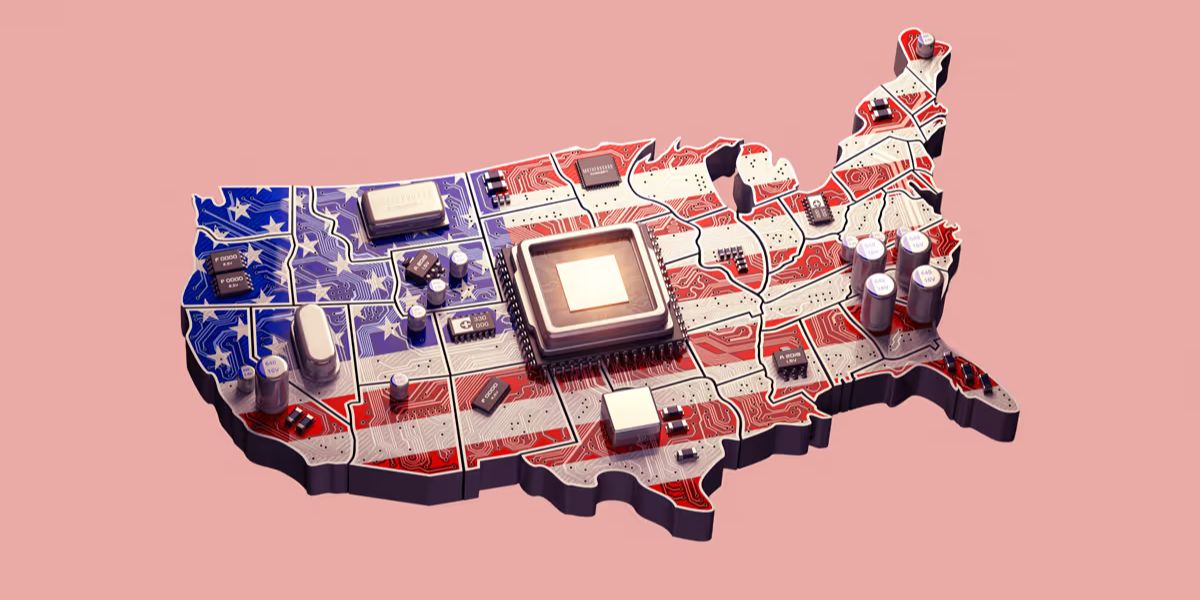
The U.S. chip strategy currently looks more like "firefighting" than a cohesive long-term architecture.
The CHIPS and Science Act represents Washington’s most ambitious industrial policy in decades. However, despite billions of dollars in subsidies and a push for technological sovereignty, experts highlight significant gaps that could undermine the ultimate success of this strategy.
Here are the key areas where the U.S. semiconductor strategy continues to struggle:
1. The Packaging Gap: Focusing on Fabrication, Not Assembly
The primary focus of the U.S. has been on "fabs"—the multi-billion dollar plants that print the chips. However, in the modern semiconductor industry, printing the silicon wafer is only half the battle.
The Problem: "Advanced Packaging," which integrates different chips into a single powerful system, is still 90% concentrated in Asia (primarily Taiwan and China).
The Consequence: Even if the U.S. produces the most advanced chips in the world, they must still be shipped back to Asia for final assembly. This means the geopolitical risks in the supply chain remain unresolved.
2. The Talent and Workforce Deficit
Tech giants like Intel and TSMC are facing a harsh reality: the U.S. lacks a sufficient number of qualified engineers and technicians to operate these massive new facilities.
The Educational Gap: For years, the U.S. education system has prioritized software engineering, while "hard" engineering and microelectronics have been sidelined.
Immigration Barriers: The U.S. still makes it difficult for high-skilled foreign graduates to remain in the country, preventing a quick fix for the talent shortage.
3. Lack of a Supply Chain Ecosystem
A semiconductor fab cannot exist in a vacuum. It requires thousands of niche suppliers for specialized chemicals, high-purity gases, quartz glass, and precision machinery.
The Problem: Most of these suppliers are based in Japan, South Korea, and Germany. While the U.S. subsidizes the giants, it has paid less attention to the small and medium enterprises (SMEs) that form the foundation of the ecosystem.
The Result: Without local suppliers, production costs in the U.S. remain 30-50% higher than in Asia.
4. Bureaucracy and Environmental Regulations
Building a fab in the U.S. takes significantly longer than in Taiwan or China.
The Problem: Navigating environmental permits (such as NEPA) and local zoning requirements can delay construction by years.
The Consequence: Delays in launching the TSMC plant in Arizona are a stark reminder that money alone cannot overcome regulatory friction.
5. The Blowback of the Tech War with China
Strict export controls imposed by the U.S. are cutting off American chipmakers from their largest market: China.
The Problem: Loss of revenue means fewer resources for Research and Development (R&D). Simultaneously, China is being forced to accelerate its own domestic technology development.
The Risk: In the long run, this could erode U.S. technological leverage as China finds workarounds and builds its own self-sufficient industry.
The U.S. chip strategy currently looks more like "firefighting" than a cohesive long-term architecture. For the U.S. to become a true semiconductor hub, Washington must address not just funding, but workforce development, regulatory reform, and the restoration of the entire supply chain. Without this holistic approach, new factories risk becoming "expensive islands" without the necessary infrastructure to support them.
Headline Options in English:
Analytical: The Weak Links in the "Chip War": Why the U.S. Semiconductor Strategy Is Still Incomplete.
News-Oriented: Billions of Dollars and Technological Gaps: Where the U.S. Chip Strategy Is Stalling.
Engaging: Is Money Enough? Why the U.S. Struggles to Reach Full Semiconductor Self-Sufficiency.
Impactful: On the Edge: 5 Major Challenges for the U.S. CHIPS Act.
Share article





Follow us in social networks
Related posts

Analysis | 2026/05/09 15:00
The Apology Trap: When Saying
In customer service, the mantra

Analysis | 2026/05/09 10:00
The Art of Discounting: Driving Sales Without Sacrificing Profit
Discounting is both a science and an art.

Analysis | 2026/05/08 18:02
How Fast-Growing Companies Make Better Decisions: A Strategic Guide
Rapid growth is managed chaos.


Analysis | 2026/05/05 18:17
People are stressed out by most news that isn’t local news, according to a new study


-

Data Hidden Behind Dissatisfaction: How to Manage Team Resistance
2026/05/09/ 18:00 -
The Apology Trap: When Saying
2026/05/09/ 15:00 -
Where the U.S. Chip Strategy Is Still Falling Short: An Analytical Overview
2026/05/09/ 12:00 -
The Art of Discounting: Driving Sales Without Sacrificing Profit
2026/05/09/ 10:00 -
How Fast-Growing Companies Make Better Decisions: A Strategic Guide
2026/05/08/ 18:02 -

The Power of One Dram to ‘’Vahe Meliksetyan’’ Foundation
2026/05/08/ 15:54 -

The international chess tournament supported by IDBank has concluded
2026/05/07/ 18:21 -
An AI Agent Is Not Your Employee: Why This Mindset Is Dangerous for Business
2026/05/07/ 17:54 -

AraratBank and Urartu Football Club Team Up to Promote Financial Literacy
2026/05/07/ 17:05 -

15 Things About Running A Small Business in 2026 That Are The Same as 2006
2026/05/07/ 16:52
 Subscribe