
What “sustainable business” truly means in a rapidly changing world
Analysis |
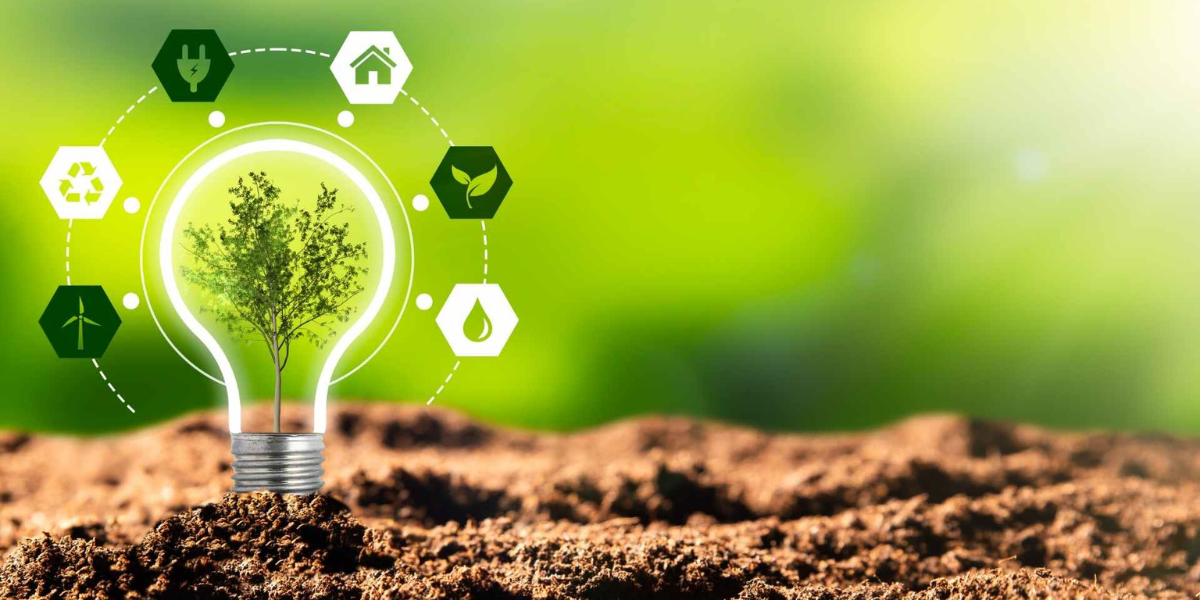
Today, the biggest challenge for companies is not competition but the speed of change.
In recent years, the term “sustainable business” has become widely used, yet it is often misunderstood. Many assume that sustainability means stability, predictability, or maintaining the same internal processes over long periods. But in a rapidly changing world, sustainability cannot mean staying still. On the contrary, sustainability is the ability of a business to evolve quickly while preserving its foundation.
Today, the biggest challenge for companies is not competition but the speed of change. Technological shifts, customer behavior transformation, global uncertainty, and market volatility force businesses to continually rethink their models. In such conditions, a sustainable company is not the one that avoids change but the one that understands what must remain unchanged and what must adapt.
Sustainability is rooted in having a strong core: values, principles, and a relationship with customers that remain relevant even through upheaval. This core acts as a compass, allowing fast decisions without loss of identity. A company with a well-defined value system can transform without self-destruction.
A sustainable business must also be a flexible business. Flexibility does not mean chaos or impulsivity. It means the ability to sense change quickly, learn quickly, restructure quickly, and abandon obsolete practices decisively. Flexibility is structural strength, not weakness. It gives sustainability its modern meaning: not immobility, but resilience.
Another essential element of sustainability is internal autonomy. Businesses that depend on a single market, a single supplier, a single team, or a single mental model cannot be considered sustainable. Autonomy requires diversity — in revenue streams, capabilities, perspectives, and decision-making levels. Diversity creates resilience. It is the architecture of a stable system.
In a world where uncertainty has become the norm, sustainability is defined not by predictability but by the capacity to withstand disruption. When change is constant, the sustainable business is the one that can evolve without losing its essence and continue creating value regardless of conditions.
Today, sustainability is measured not by how long a business remains unchanged but by how fast it can reinvent itself while holding onto its foundation. In the future, the winners will not be the strongest companies but the most adaptable and self-aware.
A sustainable business is one that lives within change without being defined by it. It is a business that grows by standing up, adapting, and moving forward guided by a strong value core.
Share article





Follow us in social networks
Related posts




-

Spring Promotion at Megamall from Idram&IDBank
2026/03/12/ 12:03 -

Work productivity begins with strong immunity: how to recover after a working day
2026/03/11/ 18:48 -

“We want to buy your item, please provide your card details.” IDBank warns about fraud on classified platforms
2026/03/11/ 14:22 -
IDBank Goes Global: Mher Abrahamyan's Interview with the Los Angeles Times
2026/03/10/ 14:38 -
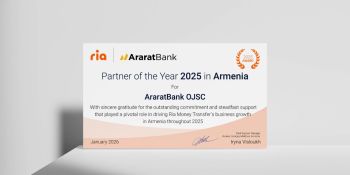
AraratBank Earns RIA Money Transfer’s Partner of the Year in Armenia for the Seventh Consecutive Year
2026/03/09/ 15:57 -

The weekend is ahead: how not to waste your time
2026/03/06/ 18:09 -

Digital Analytics and Creativity: A New Way of Thinking in Business
2026/03/06/ 17:55 -
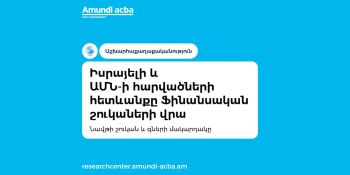
Amundi-Acba. Implications of US-Israel strikes on financial markets
2026/03/05/ 18:29 -

New Offer - Up to AMD 5 Million - Consolidate your Loans and Switch to AraratBank
2026/03/05/ 15:35 -

New Promotion at Yerevan Mall Ahead of March 8: Idram&IDBank
2026/03/05/ 14:30
 Subscribe