
How Trust Is Becoming the New “Financial Capital”
Analysis |

Trust becomes capital because it shapes economic behavior more quickly than interest rates, more strongly than price changes, and more deeply than marketing.
In classical economics, financial capital was defined as money, assets, investments, and material resources — everything that could be measured. But in today’s fast-moving world, where information spreads instantly, markets react emotionally, and consumer behavior is increasingly psychological, a new form of capital has emerged: trust. What used to be labeled “intangible” has become one of the most powerful economic assets.
Trust becomes capital because it shapes economic behavior more quickly than interest rates, more strongly than price changes, and more deeply than marketing.Trust becomes capital because it shapes economic behavior more quickly than interest rates, more strongly than price changes, and more deeply than marketing. In times of uncertainty, trust is the only reliable foundation. Companies that enjoy trust gain advantages similar to those once provided by large financial capital: lower risk, stronger customer loyalty, easier access to investment, and a level of resilience competitors cannot imitate.
For decades, businesses tried to grow by expanding advertising, increasing visibility, and pushing sales. But a brand without trust is merely a façade. Modern consumers distinguish authenticity from image, consistency from slogans, and real experience from promises. Today, success belongs not to the company that talks the loudest, but to the company that others trust enough to recommend.
Trust grows slowly but disappears instantly — a characteristic that makes it a strategic resource. It also reshapes internal culture. When employees trust leadership and the organization, they are more proactive, motivated, and creative. Psychological safety drives productivity far more effectively than strict procedures or control.
Externally, trust lowers customer acquisition costs, increases retention, stabilizes revenue, and protects companies during crises. Investors prefer predictable, transparent businesses; partners collaborate more willingly with organizations that behave consistently; customers stay loyal to people they feel secure with. Trust is no longer a “soft” factor — it is an economic asset.
In smaller or developing markets, trust often substitutes for institutions that are slow or inefficient. When formal systems are weak, trust accelerates agreements, reduces transaction costs, and sustains economic growth. Economies with high trust move faster and compete better.
In the digital age, trust is even more critical. Information overload makes people rely not on data, but on the reliability of the source. States, brands, and leaders that consistently demonstrate credibility gain influence and attract investment, talent, and partnerships.
Ultimately, trust is the only form of capital that does not depreciate through use — it compounds. It cannot be bought, forced, or manufactured overnight. It must be earned, and once earned, it becomes a long-term economic engine.
The future belongs to those who build not only value, but trust.
Share article





Follow us in social networks
Related posts


-
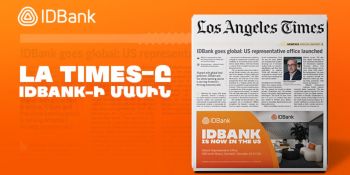
IDBank Goes Global: Mher Abrahamyan's Interview with the Los Angeles Times
2026/03/10/ 14:38 -
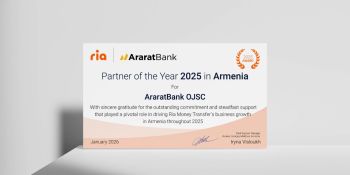
AraratBank Earns RIA Money Transfer’s Partner of the Year in Armenia for the Seventh Consecutive Year
2026/03/09/ 15:57 -

The weekend is ahead: how not to waste your time
2026/03/06/ 18:09 -

Digital Analytics and Creativity: A New Way of Thinking in Business
2026/03/06/ 17:55 -

Amundi-Acba. Implications of US-Israel strikes on financial markets
2026/03/05/ 18:29 -

New Offer - Up to AMD 5 Million - Consolidate your Loans and Switch to AraratBank
2026/03/05/ 15:35 -

New Promotion at Yerevan Mall Ahead of March 8: Idram&IDBank
2026/03/05/ 14:30 -

Multilayered Thinking: A Key Advantage of Successful Businesses
2026/03/04/ 18:23 -

IDBank Expands Travel Benefits of Premium Cards
2026/03/04/ 16:22 -

Aligning visions toward a common goal: the secret of a united team
2026/03/03/ 18:26
 Subscribe