

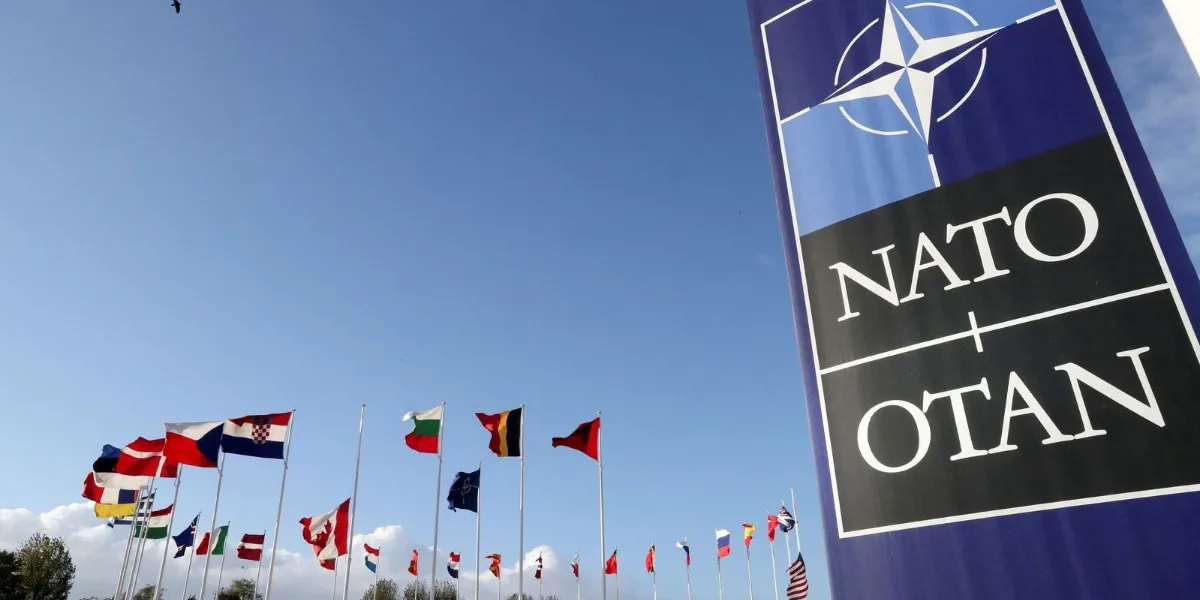
“The violations of Russian airspace over NATO's eastern flank countries highlight the urgent need for the alliance's air defense systems consolidation against missiles and drones,” the leaders of 14 allied countries stated on Wednesday.
In a joint statement published after the meeting of eastern flank allies in Bucharest, they also called for closer cooperation in strengthening the defense industry's potential. Present at the meeting were Romanian President Nicolae Ciucă and Polish President Karol Nawrocki.
“We condemn Russia's extreme confrontational actions against allies and partners, including sabotage, cyberattacks, as well as a wide range of hybrid attacks and destabilizing activities,” the leaders' joint statement said. “The periodic violations of airspace on the eastern flank underline the urgent need for NATO's continued strengthening of air and missile defense, including against threats posed by unmanned aerial vehicles.”
Among the participants of the one-day meeting on Wednesday were Ukrainian President Volodymyr Zelensky, NATO Secretary General Jens Stoltenberg, and U.S. Under Secretary of State for Arms Control and International Security Thomas DiNanno.
The meeting, which took place ahead of the NATO summit scheduled for July in Ankara, aims to find ways to overcome the growing disagreements between U.S. President Donald Trump and Europe regarding the Iranian crisis.
“Further expanding the transatlantic defense-industrial base, including increasing production capacities, enhancing supply chain resilience, and effective multinational procurements... is crucial for responding to modern security challenges,” the statement said.
The document was signed by the so-called “B9 group,” which unites nine NATO allies from Central and Eastern Europe, established in Bucharest in 2014. The B9 group includes Bulgaria, the Czech Republic, Estonia, Hungary, Latvia, Lithuania, Poland, Romania, and Slovakia.
Zelensky informed the meeting participants that it is currently difficult to say what results can be expected from the NATO summit in Ankara, but it should send positive signals to the entire Euro-Atlantic community.
“At the same time, we should not be afraid to discuss more unified and, in some areas, more autonomous European military capabilities,” Zelensky emphasized.