"Exposure and attention don't pay the bills"—this is a common refrain in the creative economy. Yet, the Super Bowl halftime show stands as a rare exception: the biggest stars in the music world perform without a fee, trusting that those 13 minutes spent in front of millions of viewers will pay off long after the final note has faded.
The most prominent names in music do not accept payment for their 13 minutes on the field. The payoff comes later—and on a much grander scale. Since 2019, Jay-Z and Roc Nation have partnered with the NFL (National Football League) to produce the show, and they have seen firsthand how this dynamic plays out, reports Inc.com. The Attention and Recognition Effect
After Shakira and Jennifer Lopez ushered in this era, their Spotify streams increased by 230 and 335 percent, respectively. The Weeknd, who reportedly put $7 million of his own money into the production budget, saw his song sales increase by 385 percent.
After Usher’s performance, his Spotify streams skyrocketed by nearly 550 percent, and his song “Yeah!” went 13x platinum. Kendrick Lamar racked up a record 133.5 million viewers. Bad Bunny’s U.S. streams jumped from 36.2 million to 99.6 million in a single day.
Rihanna’s Founder Strategy
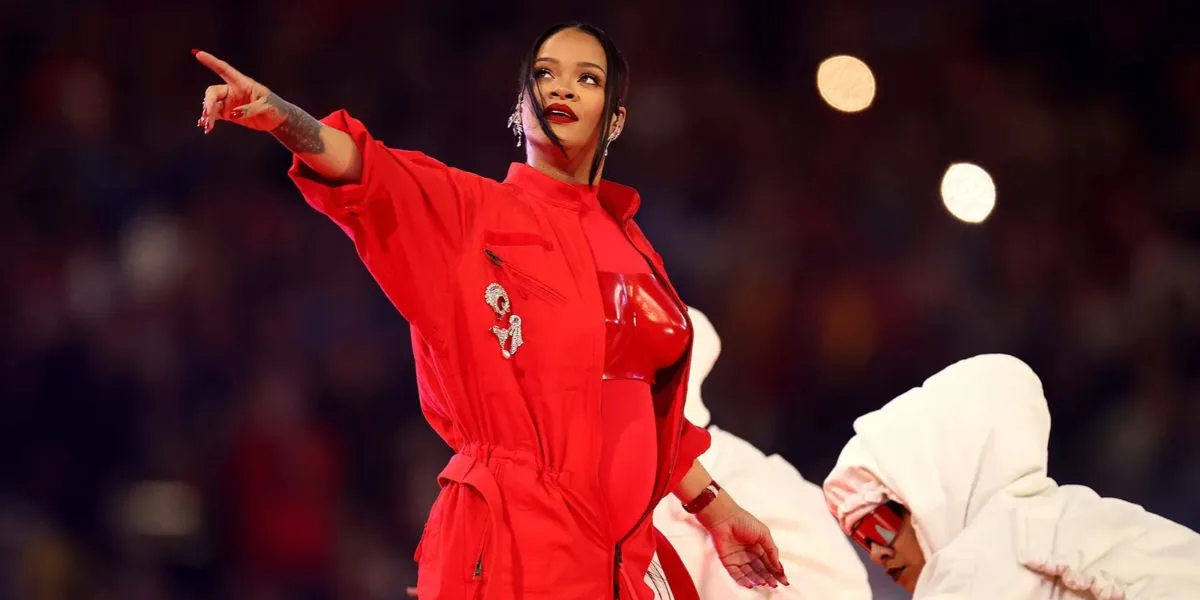
Of all the major artists of the Roc Nation era, Rihanna has had the most halftime show as a brand founder. Between songs, she took a Fenty Beauty compact powder from one of the dancers and applied it to her face live on air—turning her comeback into the most-watched "Get Ready With Me" (GRWM) video ever filmed.
Her entire makeup look featured Fenty products, and the dancers were dressed in Savage X Fenty. Leading up to the event, the brand released a collection dedicated to the Super Bowl, and following the big day, they sent customers an email detailing the products used for her look.
Meanwhile, music streams surged by 640 percent; Fenty Beauty generated $5.6 million in Media Impact Value within the first 12 hours, and Savage X Fenty saw an increase in sales of $2.6 million. And she didn’t have to purchase a single billboard or second of airtime. For Super Bowl LXI, the person in charge of the show chose herself as the main headliner. Previous performers demonstrated what this stage is capable of, but Rihanna showed what a founder can achieve through it. She didn’t just perform a concert at the Super Bowl; she used the event to launch an entire marketing campaign.
What Jay-Z Can Learn from Rihanna’s Approach
Jay-Z has spent decades building his name into a collection of business ventures, and now he has the biggest platform of his career to put them to work. Here is what he can learn from Rihanna about maximizing returns from 13 unpaid minutes:
Integrate products into the narrative (Storify). Rihanna’s moment using a compact powder felt effortless, human, and authentic to the brand. When you watch a pop star go through their "GRWM" (getting ready with me) process in real time, the performance begins to feel like a piece of performance art rather than a standard advertisement.
Nurture your audience before, during, and after the performance. Fenty leveraged the mystique of the Super Bowl by dropping products ahead of the game and continuing the narrative afterward—using those 13 minutes as the pinnacle of a sales funnel, rather than just a one-off stunt. For Jay-Z, the focus is on how to captivate the audience on stage and how to harness that attention once the performance concludes.
Trust your team to showcase your portfolio. Rihanna integrated her dancers in such a way that every shot simultaneously served as an advertisement for Savage X Fenty. Jay-Z has a star-studded roster at his disposal—ranging from his own family to an extensive list of Roc Nation artists, athletes, and associates. He has the ability not only to showcase himself but also to shine a spotlight on his team and the people around him.
Rihanna proved just how lucrative a halftime show can be, even without a performance fee.